The Civil War did not just happen. One day, the entire country did not decide to go to war against friends, neighbors and even family. The entire war was a result of the escalating conflicts between the North and South regions. It is hard to determine just one cause of the Civil War, however, there are many events that played a role in provoking the war.

.jpg)
 Originally, this bill sat for several months due to the standoffish behavior of President Zachary Taylor and the resilience of the congressmen. However, when Taylor unexpectedly passed and was replaced by President Millard Fillmore, who favored the compromise wholeheartedly. This motivated several Democrats to take leadership as well to make the compromise appealing to the South and the Democrats. Finally, when the bill was passed in September 1850, it included five bills that follows: California was entered as a free state in the charter of America, New Mexico and Utah had popular sovereignty (meaning, the people had the option to decide the state’s fate in terms of being free/slave state), Texas gave up lands to New Mexico while receiving 10 million in return, slave trade was abolished in the District of Columbia and a new Fugitive Slave Law was made active (in which all federal officers had to arrest fugitive slaves with the consequence of being arrested for disobeying this law). The final bill was very controversial, for it not only forced Northerners to condone slavery but it also increased efforts of abolitionists. As well as this, it also delayed the start of the Civil War.
Primary Source:
This website is a very informational resource if you are looking to learn more about the Compromise of 1850. Not only does it detail the process of events, it goes into depth regarding the effects on the nation. A chart that explains in detail the differences between the North and South is also included. This bill required not only one person, but a group of men who worked tirelessly with the hope of solving America's problem, a mystery that will be revealed throughout the breakdown of this bill.
http://www.ushistory.org/us/30d.asp
 In 1854, Illinois senator Stephan Douglas proposed the Kansas-Nebraska Act to resolve the issue of the uncategorized territory of Nebraska. Faced with the problem of the Missouri Compromise’s latitude line of 36º30', he suggested a nullification of the Missouri Compromise, leading to popular sovereignty. When it was passed in May 1854, the Northerners and Southerners each rallied in attempts to promote their own ideas over the other.

.jpg) In 1856, president James Buchanan desperately looked for a resolution to the conflict growing in Kansas. With the case of Dred Scott v. Sandford, he hoped this would provide a resolve. Dred Scott was a slave who sued for his freedom after living in free-state Illinois and free-territory Wisconsin. In the case, Chief Justice Roger B. Taney provided three key arguments against Scott. 1) He was a slave 2) Slaves were not allowed to become citizens in America 3) Slaves were property and could be considered property anywhere in the country. Thus, this ruling also ruled the Missouri Compromise as unconstitutional, reinforcing the nullification during the Kansas-Nebraska Act. Unfortunately, this ruling did not solve but in fact increased tensions between the two groups of America.
In 1856, president James Buchanan desperately looked for a resolution to the conflict growing in Kansas. With the case of Dred Scott v. Sandford, he hoped this would provide a resolve. Dred Scott was a slave who sued for his freedom after living in free-state Illinois and free-territory Wisconsin. In the case, Chief Justice Roger B. Taney provided three key arguments against Scott. 1) He was a slave 2) Slaves were not allowed to become citizens in America 3) Slaves were property and could be considered property anywhere in the country. Thus, this ruling also ruled the Missouri Compromise as unconstitutional, reinforcing the nullification during the Kansas-Nebraska Act. Unfortunately, this ruling did not solve but in fact increased tensions between the two groups of America.
 In 1858, a series of debates fought between Stephen Douglas and Abraham Lincoln caught the attention of America. Focusing on the main point of slavery, each contender pointed out his rival’s flaws. Lincoln focused on the point that Douglas was not an abolitionist, but rather a slavery supporter, for he did not acknowledge slavery, choosing to leave the issue in the hands of the people. In Lincoln’s eyes, this was an equal crime to slavery. Douglas chose to focus on the contradictory nature of Lincoln: how he supported white supremacy but intended to promote racial equality. Although it was Douglas who came out on top (returning to the position of Senator), it was Lincoln who made a lasting impact (garnering many supporters for his views as well as strengthening his political party’s force).
The Election of 1860
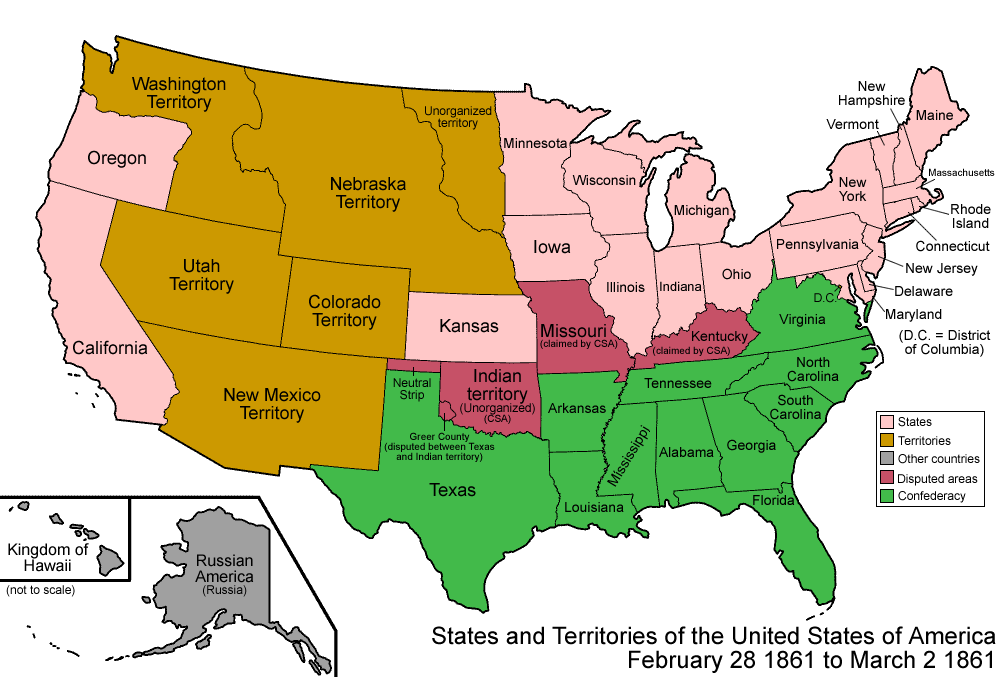
 For the Republicans, deciding their candidate was a landslide favoring Abraham Lincoln. Their initial runner, William H. Seward, had a reputation of radicalism and opposition of the nativist movement. Thus, Lincoln seemed to be the perfect candidate to represent the political party. Unfortunately, the Democrats were not as united in their decision. They split into three political parties, known as: The Douglas Democrats (those who supported Stephen Douglas), The “Southern Rights” Democrats (a combination of the Whigs and the Know-Nothings) and the Constitutional Unionists (those who represented the sectional accommodation). Unsurprisingly, Lincoln obliterated the competition. Chaos soon erupted in the South, as they had always had office or dominance over the government office. With these results of the election, they started a movement to separate from the union.
Preview: Federal Government’s Authority vs. States’ Rights
In 1820s -1840s, Americans faced the standing conflict of State Rights. Many argued for the right to have self-sufficient states while others wanted to have stronger federal influence. This created a rift between the Northerners and the Southerners, as each thought their proposals were superior over the other. Some significant conflicts that developed both sides include:
- The South Carolina Nullification Crisis
- Several Judicial Cases argued by Judge John Marshall
Preview: Economic Changes
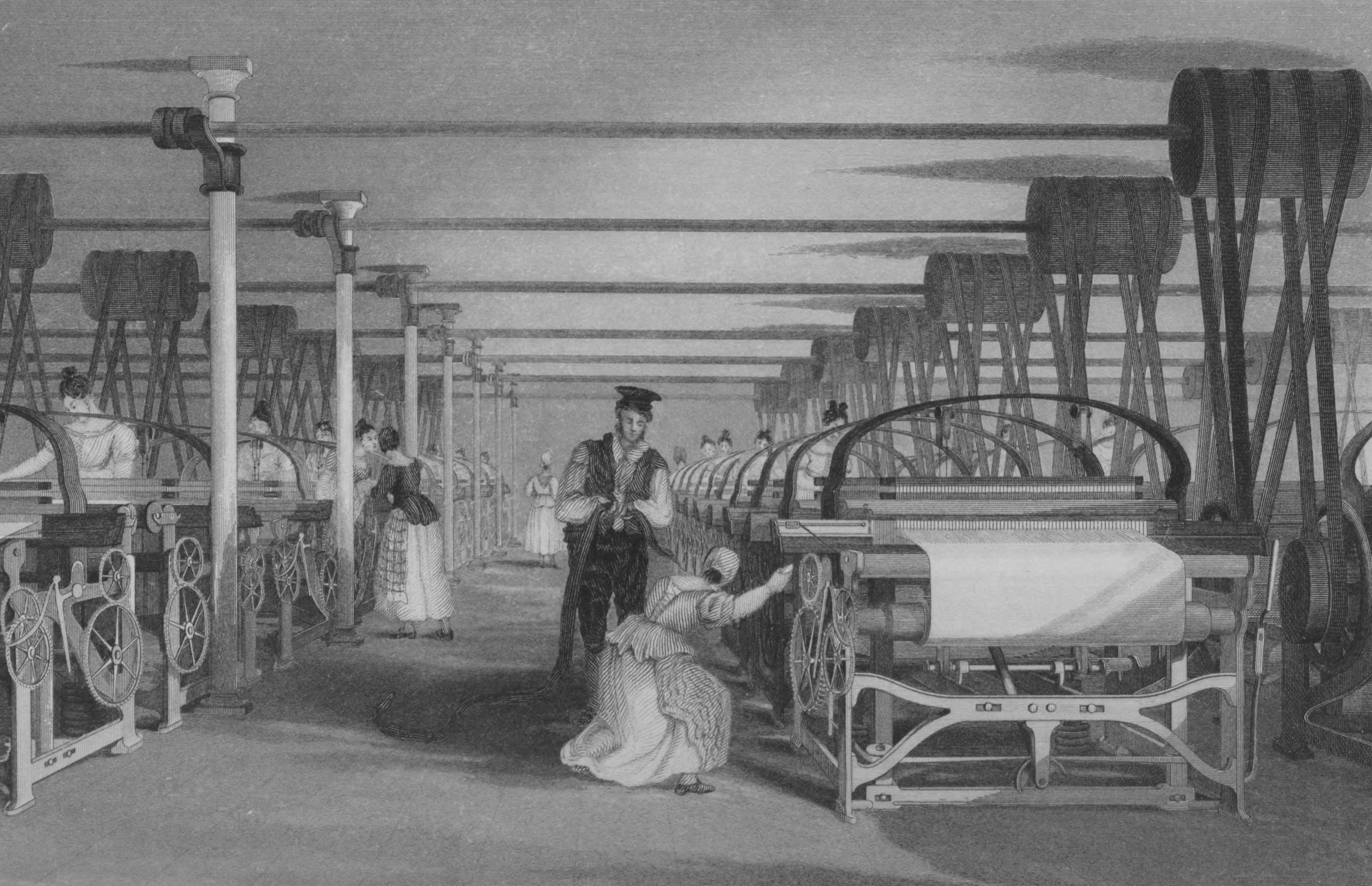
After 1820 leading up to the Civil War, America underwent many economic changes. However, due to the differences between the North and the South, not everyone regarded the change as beneficial, thus causing a bigger division between the two regions. Some influential economic changes included:
- · Railroads and Canals
o Helped transport thousands of pounds of goods across America
o Developed many industries (such as iron and timber)
- · Telegraphs
o Promoted connections and communication across America
- · Agricultural improvements
o New technology on farms and plantation
- · Manufacturing breakthroughs
o Textile industries
o New machinery developed (such as the Cotton Gin, the Spinning Jenny, etc.)
The Compromise of 1850
Primary Source:
This website is a very informational resource if you are looking to learn more about the Compromise of 1850. Not only does it detail the process of events, it goes into depth regarding the effects on the nation. A chart that explains in detail the differences between the North and South is also included. This bill required not only one person, but a group of men who worked tirelessly with the hope of solving America's problem, a mystery that will be revealed throughout the breakdown of this bill.
http://www.ushistory.org/us/30d.asp
The Kansas-Nebraska Act and Bleeding Kansas
As tensions rose, it led to violence across Kansas, a time known as Bleeding Kansas.
The Dred Scott Decision
The Lincoln-Douglas Debates
John Brown’s Raid on Harper’s Ferry
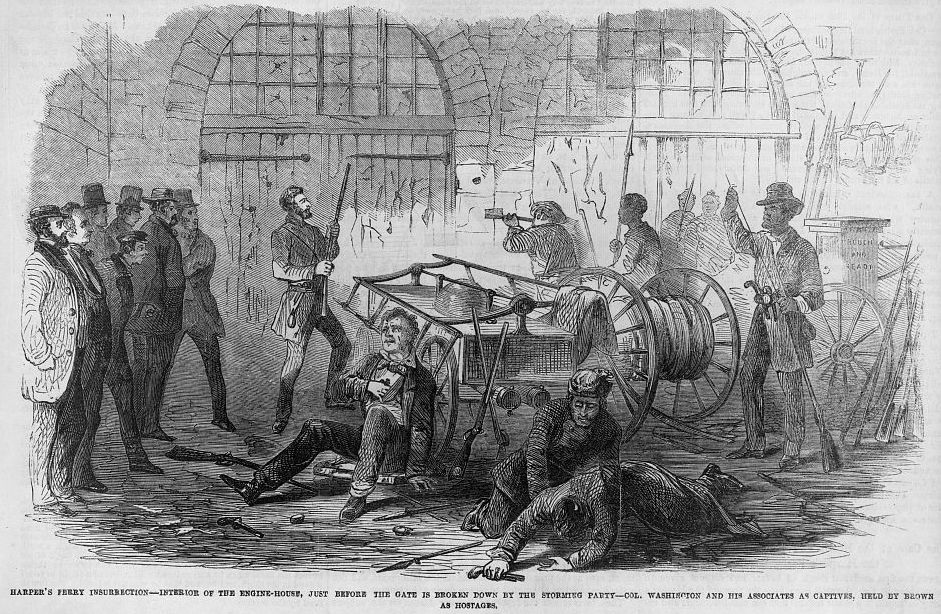
John Brown, a famous abolitionist, made the rift between the North and South even more unresolvable, due to his actions in 1859. On October 15th, 1859, Brown led a raid with eighteen other men in hopes of starting a war on the plantations in the south. However, with the lack of support from the neighboring slaves, Brown and his men were quickly surrounded and forced to surrender. All were tried and convicted of treason, set to be put to death December 2nd of the same year. Although Brown died without reform, he generated an outpour of support from his fellow Northerners.
The Election of 1860
A Summary of This Page
Here is a fun rap that summarizes all the causes of the American Civil War:
Here is a fun rap that summarizes all the causes of the American Civil War:

No comments:
Post a Comment